Sleep bruxism, also referred to as grinding teeth during sleep, is an ailment that most parents will realize their children have in accordance with the grinding noise in the night or the wear of the teeth. Bruxism in children may be quite disturbing to witness but in most cases the behavior is short-lived and harmless. Nevertheless, continuous grinding can result in dental issues, and this must not be overlooked. The knowledge of the reasons why children grind their teeth and when they need the help of professional assistance could help the parents make the appropriate actions in relation to preserving the health of their child orally.
What Is Bruxism?
Bruxism is defined as the automatic grinding, clenching or gnashing of teeth. It usually happens when one is asleep but a few kids can also grind their teeth even when awake without noticing it. Bruxism at night is regarded as a movement disorder that occurs in sleep and usually in the light phases.Grinding of teeth can lead to audible grinding of teeth, or other signs that include tightening of the jaw or movement of the muscles of the face during sleep. In most instances, the children do not know about the habit and only after hearing the sound or observing the changes in the teeth the parents know about it
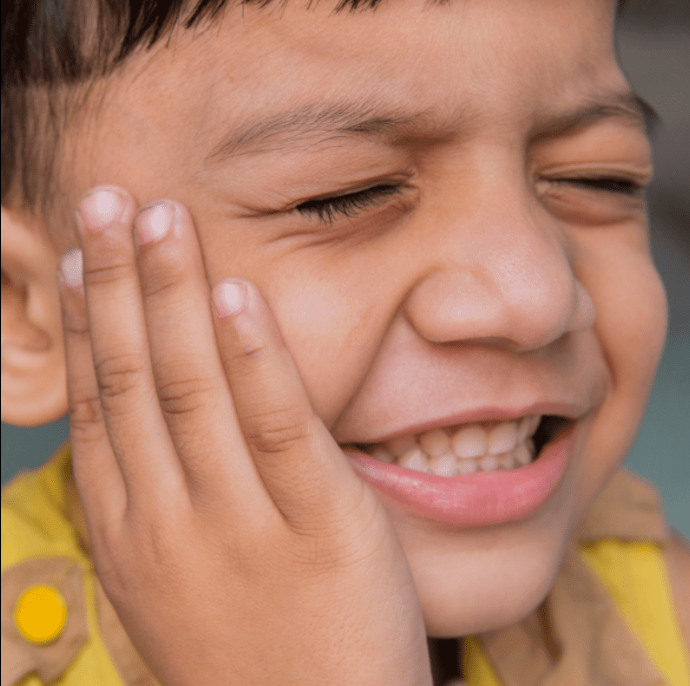
.The prevalence of teeth grinding in children.
Bruxism is not very uncommon in childhood especially among the younger ages. Research indicates that there is a high proportion of children whose teeth are grounded at some stage of growth. It is common among children who are experiencing the period of change in dental development, including the eruption of primary teeth or the onset of replacement of the baby teeth by permanent teeth.
In most cases, the grinding automatically subsides with age and maturing of the oral machinery of children. Nonetheless, when the habit lasts long or causes pain or tooth decay, it is to be considered by a dentist.
General Bruxism in young people.
Bruxism is not often caused by one thing. Rather, the condition can be caused by some physical, psychological, and developmental factors.
Alterations in Teeth and Alterations in Bite.
Their jaws and teeth keep on changing as the children grow. As the baby teeth are lost, and new teeth grow up, there is a short-term change of the bite relation between the upper and lower teeth. This is due to a period of transition which sometimes causes grinding where the body is trying to form a different bite.
Stress and Affective Issues.
Some of the most prevalently reported causes of teeth grinding in children include psychological factors. Night clenching and grinding may result due to stress, anxiety, excitement or emotional tension. This habit can be caused by changes like the beginning of school, exams, the change of households, or new surroundings.
Sleep Disturbances
It may also be caused by sleeping disorders or abnormal sleeping patterns. The children with restless sleep, snoring or difficulty breathing during sleep can more likely be prone to grinding teeth. In other instances, bruxism is related to other disorders including sleep apnea.
Patterns of Hyperactivity or Concentration.
Children with hyper active temperaments or those that are related to attention and focus can exhibit more tendencies towards teeth grinding. Even though this relationship is under investigation, neurological causes might affect the activity of jaw muscles in sleep.
Reaction to Suffering or ailment.
Sometimes it can be ushered by grinding in response to painful experiences during teething or earache or any other problems in the mouth. The grind could give the jaw or other areas temporary relief which is pressure or pain.
Signs and Symptoms that Parents ought to be on the look out.
Teeth grinding during the night time is not always clear particularly when it is done in a silent manner. Nevertheless, there are some symptoms that might show that a child is having bruxism:
- Hearing grinders when sleeping.
- MorningReport of facial pains, jaw aches.
- Headaches after waking up
- Greater sensitivity of the teeth.
- Flattened, chipped or worn toothed.
- Shifting/ interrupted sleep.
In case these symptoms are frequent, it might be necessary to conduct a dental check-up to determine the extent of damage to the teeth or their causes.
Potential Impact to Dental Health.
The occasional grinding may not pose much issue but in long term, the presence of bruxism can impact on the oral health of a child. Constant grinding can cause enamel wear, tooth fractures, tooth hypersensitization or jaw pain. In some extreme cases, the condition may be the cause of the issue of the temporomandibular joint (TMJ), a joint in which the skull is joined to the jawbone.
The early detection will avoid the damage that may occur in the long term and will provide proper management measures to be applied.
The Management of Bruxism in Children.
Bruxism can be treated depending on the cause of the condition and the symptoms. There is often no treatment required and especially in those cases where the grinding is mild and temporary. The state is usually observed by dentists at checkup.
In case of need of intervention, the management can incorporate a number of strategies:
- Monitoring and Observation: In younger children, the dentists usually check the situation over time to determine whether it resolves itself as the child matures.
- Night Guards or Protective Appliances: in instances where the patient is grinding a lot and wearing out teeth, a special dental appliance can be prescribed to help protect the tooth during the sleep.
- Stress Reduction Techniques: In case of the emotional factors, bedtime routines and minimization of stress can be observed to reduce the number of grinding events.
- Optimizing Sleep: It is possible to optimize sleep habits, by making schedules regular and dealing with any breathing or sleep-related issues, which may help to improve the quality of sleep and may ameliorate bruxism.
The Question of When Oregonians visit Dentists.
A dentist should be consulted by parents in case grinding is a regular process, leads to visible tooth damages, or is accompanied by pain and sleeping disruptions. Professional assessment can be used to establish the underlying causal factors and to establish whether one needs to be treated.
Dental checkups are crucial in preventing the occurrence of bruxism because such habits are identified at an early stage before a lot can be lost.
Conclusion
Grinding of teeth in children is rather disturbing to parents, yet it is usually a temporary process that can be attributed to growth, emotional reasons or sleeping habits. Knowledge of the possible reasons and awareness of the initial symptoms can contribute to the provision of children with timely treatment in case of necessity. Self-observation of oral health and consulting a specialist when the symptoms do not disappear are worthwhile measures in preserving the developing teeth of a child.
At Dentistry Junior, the assessment and prevention can be utilized well in advance to determine such habits as bruxism and direct the family to the successful methods that can help towards the healthy growth of teeth.