The dental crisis of the child may occur within several seconds. And during sports, playing at home or even while eating something so simple as popcorn. It is not only the pain or bleeding that the parents will face; but the uncertainty: Is this serious? Is it urgent that a dentist be visited, or can it be deferred till the next morning? In child dentistry, time is of the essence. Certain cases could be addressed by the use of cool first aid at home, whereas other cases need immediate attention of a professional to prevent infection, save a tooth, or safeguard the general health of the child.
This is a guide by Dentistry Junior, helps parents and caregivers related to, which describes the most frequently occurring dental emergencies in children, warning signs that must be addressed without delay, and steps that must be followed to be safe before visiting the dental clinic. One thing is evident: do what is necessary, do it as soon as possible, do not use harmful measures at home, and save the child as serious complications can be removed.
What Counts as a Dental Emergency in Kids?
A dental emergency is any mouth or tooth problem that needs urgent care to:
- Stop bleeding
- Control swelling or infection
- Save a tooth
- Prevent worsening pain
- Protect the airway or facial structures
Admittedly, not all toothaches are emergency cases but there are certain symptoms which must not be overlooked. Children cannot express their emotions, and the parent will be required to rely on what can be observed and behavioral changes.
Red Flags: Signs That Mean “Rush to a Dentist Now”
A child should be taken for urgent dental care (or emergency medical care when severe) if any of the following occur:
1) Facial Swelling (Especially Rapid Swelling)
One of the symptoms of a spreading infection can be facial swelling, including cheeks, jaw, and eyes. Dental infections in children can be very fast-moving.
Rush urgently if:
- swelling increases within hours
- the child looks puffy on one side
- the eye area is involved
Swelling is not something to “wait and watch” when paired with pain or fever.
2) Fever With Tooth Pain
A fever along with toothache often signals infection. In children, infections can spread faster than in adults due to smaller anatomy and developing immune systems.
Watch for:
- fever + tooth pain
- fever + swelling
- child becoming unusually tired or cranky
3) Trouble in Breathing, Swallowing or Opening the Mouth
It is a strong red flag that one should not disregard. The activation or swelling of muscles of the throat or the jaw can have a life-threatening complication.
Emergency measure: Ambulance call-in case of inability to breathe or swallow, call an ambulance. Airway safety must be the priority in the case of dental care.
4) Uncontrolled Bleeding After an Injury
It’s usual to experience a little bleeding from the gums after a fall. However, blood coming from the gums that won’t cease requires immediate examination.
Rush if:
- bleeding continues beyond 10–15 minutes despite pressure
- the child is dizzy or very pale
- a deep cut is visible inside the mouth
5) A Knocked-Out Permanent Tooth
This is among dental emergencies that require immediate attention.
Important note:
- Missing permanent tooth struck down = dental emergency.
- Baby tooth knocked out = go to the doctor, have him look at it, but do not in any way try to plant it again.
In case a tooth of an adult is knocked out fully, then the patient has a chance to save the tooth provided they act promptly.
6) A Tooth That Is Pushed In, Out, or Out of Position
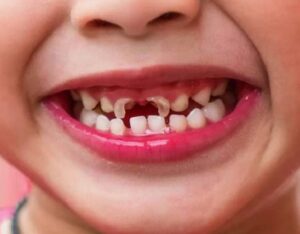
After trauma, a tooth may look shifted, tilted, or “shorter” than the neighboring teeth.
This can mean the tooth is displaced into the bone or moved forward. Both require urgent dental care and X-rays.
7) Severe Pain That Doesn’t Improve With Medicine
Do not ignore pain that is very strong, continuous, or it wakes the child more than once.
Such pain that does not respond to analgesics suitable for the child’s age may suggest:
- deep decay reaching the nerve
- infection
- crack/fracture
- abscess pressure
8) Pus, Bad Taste, or a Gum “Pimple”
A small bump on the gums that releases fluid, or a sudden foul taste, may indicate an abscess draining.
Even if pain reduces temporarily, infection is still present and needs proper treatment.
Common Dental Emergencies in Kids (And What to Do Immediately)
1) Toothache (Sudden or Persistent)
What it could mean: cavity, infection, food stuck, gum inflammation, erupting tooth
First aid at home:
- rinse gently with warm water
- floss carefully to remove stuck food
- apply a cold compress on the cheek
- give age-appropriate pain relief if needed
Do not do:
- apply clove oil, garlic paste, or alcohol rinses
- place aspirin on gums (causes burns)
Rush urgently if: pain + swelling, fever, or child can’t eat/sleep.
2) Knocked-Out Tooth
If it is a permanent tooth:
- pick it up by the crown (white part), not the root
- rinse briefly with clean water if dirty (do not scrub)
- try to place it back in the socket only if safe and child cooperates
- if not possible, store it in cold milk or the child’s saliva
- reach the dentist immediately
If it is a baby tooth:
Do not replant. Still seek dental care quickly to check for injury to surrounding teeth.
3) Broken, Chipped, or Cracked Tooth
What to do:
- rinse mouth gently
- save any broken tooth fragment in milk
- cold compress for swelling
- avoid chewing on that side
Even small chips may expose the inner tooth and lead to sensitivity or infection later.
Rush urgently if: bleeding from the tooth, severe pain, or visible pink/red area (nerve exposure).
4) Cut Lip, Tongue, or Cheek
What to do:
- rinse gently with clean water
- apply pressure with clean gauze
- cold compress on the outside
Rush urgently if:
- cut is deep or gaping
- bleeding won’t stop
- child struggles to talk or swallow comfortably
5) Object Stuck Between Teeth
Sticky food, popcorn kernels, or small toy parts can cause sharp pain.
Safe steps:
- use dental floss gently
- avoid toothpicks or sharp objects
Rush if: object cannot be removed or pain worsens.
6) Swelling Near the Gum or Jaw
Swelling often indicates infection.
What helps temporarily:
- cold compress
- pain relief as per dosage
- keep the child hydrated
Do not: apply heat or attempt to pop any swelling.
Swelling needs urgent dental evaluation to prevent spread.
When It Can Wait (But Still Needs a Dentist Soon)
Not every dental issue needs a midnight emergency visit, but many still require an appointment within 24–48 hours:
- mild tooth sensitivity without swelling
- small chip with no pain
- mild gum bleeding while brushing
- loose baby tooth with mild discomfort
- food stuck that was removed and pain resolved
Even in these cases, delaying too long can turn a small problem into a painful one.
What to Keep in a Child Dental First-Aid Kit
A simple kit at home can help parents stay prepared:
- clean gauze
- child-safe pain relief (as advised by pediatrician)
- small cold pack
- dental floss
- clean container with lid (for broken tooth pieces)
- dentist’s contact number saved on phone
Preparedness reduces panic and improves outcomes.
Mistakes to Avoid During a Dental Emergency
Some well-meaning actions can worsen injury:
- Do not apply clove oil or strong herbal oils to a child’s gums
- Do not use hot compresses on swollen cheeks
- Do not place aspirin on gums
- Do not ignore swelling even if pain is mild
- Do not delay a knocked-out permanent tooth case
Quick, calm action is always safer than experimenting with home hacks.
Why Acting Fast Matters in Children
Children’s mouths heal well—but infections and injuries can also progress quickly. Early treatment helps:
- save teeth that might otherwise be lost
- reduce the need for complex procedures
- prevent infection spread
- restore comfortable eating and sleeping
- protect developing permanent teeth underneath baby teeth
Dental emergencies are not only about pain relief. They are also about protecting growth, speech development, nutrition, and confidence.
Final Takeaway
Dental emergency in children can be defined as a condition that causes a great deal of pain, swelling, fever, bleeding which cannot be stopped, trauma that shifts or knocks out a tooth, or any other evidence of infection such as pus and bad taste. In case of such red flags, the safest decision will be to seek dental care. In less serious issues, prompt assessment will also avert complications and make the treatment a simple one.
In case of emergency treatment to the child on urgent dental situations, parents should call Dentistry Junior so that the child could get appropriate treatment at the appropriate time with safety, calmness and with long term oral health as the first priority.