Dentistry Junior knows that teeth alone are not the ones that make a healthy smile. The manner in which the child breathes, swallows, licks her tongue, and the muscles that she uses on her face have a strong influence on the development of her teeth and jaws. Myofunctional therapy is an exercise based specialised treatment and is aimed at correcting incorrect oral habits and retraining muscles of the tongue, lips, cheeks and jaw to coordinate their action
Numerous orthodontic issues including open bites, crossbites, crowding and even relapse following braces are all tightly connected with muscle imbalances or improper oral position. Myofunctional therapy promotes stability and more healthy overall development by focusing on the root cause of alignment issues, and not only the manifested one.
What Is Myofunctional Therapy?
Myofunctional therapy is a systematic regimen of exercises, which are simple and effective but aimed at the betterment of the oral muscles. These exercises in effect re-educate the tongue to rest in the right position, stimulate the nasal breathing and help the tongue to swallow in the right way.
In a healthy oral posture:
- The tongue is mildly positioned on the roof (palate) of the mouth.
- The lips are closed in repose.
- The breathing is done via the nose.
- The swallowing occurs without pushing the tongue on the teeth.
Nevertheless, several children learn to have habits like mouth breathing, tongue thrusting, thumb sucking or inappropriate swallowing patterns. In due course, these habits may affect the development of jaws, structure of face, and the placement of teeth.
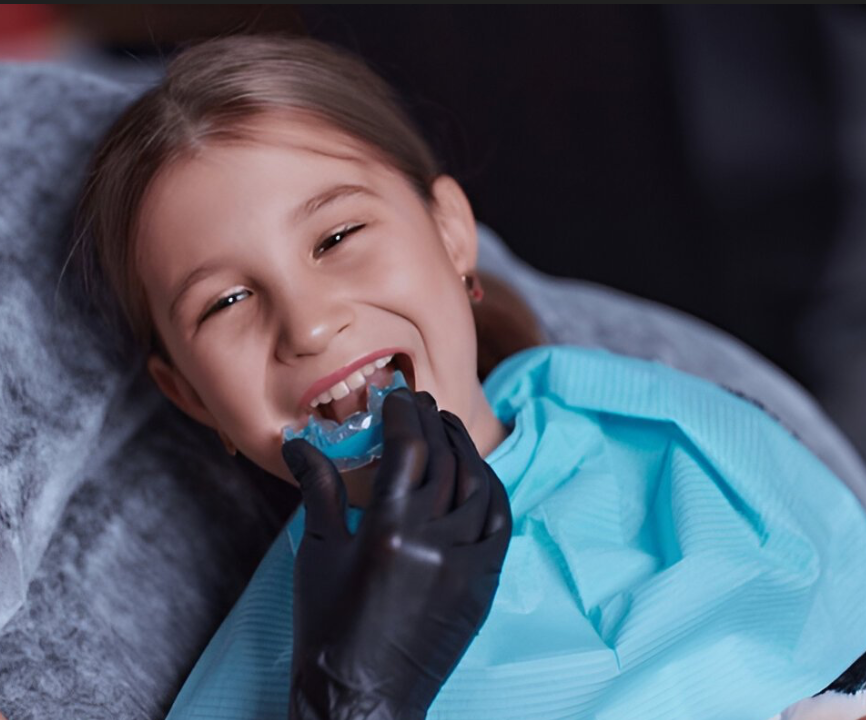
The Myofunctional therapy is slow and mild in correcting such patterns to direct the muscles to work in a natural and effective manner.
The importance of Oral Muscle Function.
The tongue is a strong muscle. When it persistently rubs against the teeth rather than the palate, it may cause teeth to be out of position. On the same note, chronic mouth breathing can influence facial growth and the development of the jaw.
The malfunction of the muscle can help:
- Bite open or bulging teeth.
- Crowded or misaligned teeth
- Speech difficulties
- Jaw discomfort
- Post-orthodontic relapse.
- Poor facial balance
Restoring muscle patterns at an early stage can assist in facilitating natural development, and the chance of more complicated corrections being made in future.
The advantages of Myofunctional Therapy.
Myofunctional therapy has both benefits in terms of functionality and development.
Promotes Proper Breathing
Natural breathing is beneficial in that it facilitates the uptake of oxygen and healthy living. It also helps in the development of a balanced facial development.
Fixes the Swallowing Patterns.
Children are taught not to thrust their tongue forward against the teeth when swallowing and this minimizes the amount of pressure that may lead to misalignment.
Favors Sharing Stature.
A proper muscle position enables the growth of upper and lower jaws in better harmony.
Improves Oral Posture
Education of children to rest with tongue in the palate and lips closed helps in orthodontic stability in the long term.
Minimizes risk of Relapse of Orthodontics.
Untreated muscle habits may cause the movement of teeth out of place after the braces or aligners. Myofunctional therapy serves in the maintenance of results.
Enhances Speech Clarity
Better tongue control may have a positive effect on articulation and speech development.
Symptoms Your Child Could be Improved with Myofunctional Therapy.
Minor oral habits are not realized by parents. The evaluation of your child may be beneficial in case you observe:
- Frequent mouth breathing
- Snorting or scratching when asleep.
- Tongue interstitial at rest.
- Problem with maintaining lips closed.
- Articulation issues with speech.
- Thumb sucking after early childhood.
- Tooth movement following orthodontics.
Identification at early stages helps to make correction easier and better.
The mechanism of Myofunctional Therapy.
The study of the oral posture, breathing pattern, swallowing function, and muscle coordination of your child are all a part of the initial examination to initiate the therapy process in Dentistry Junior.
Step 1: Assessment
We examine the position of the tongue, strength of lips, habit of breathing to see the areas that require improvement.
Step 2: Customised Workout Schedule.
Every child will be provided with some exercises that are specific to their needs. These are easy, harmless, and routine exercises that have to be performed at home.
Step 3: Guided Training
In the follow-up we check the progress, improve methods, and promote standardization.
Step 4: Orthodontics (Supplemental, as Required) Integration.
Myofunctional therapy used in the combination with orthodontic treatment improves efficiency and stability, which guarantee better long-term results.
Consistency is key. It takes children very little time to adjust with the practices, and they would automatically change their habits to become healthy with the support of their parents.
Myofunctional Therapy Role in Professional Success.
Orthodontic appliances would help in positioning teeth but the muscles determine whether the teeth remain there. When bad tongue position or swallowing patterns are maintained, teeth would tend to shift back.
Myofunctional therapy reinforces the platform of orthodontic correction. By teaching children to:
- Rest the tongue on the palate
- Maintain closed lips at rest
- Breathe through the nose
- Swallow under no pressure of the teeth.
We make sure that the forces of the muscles do not ruin the alignment.
This has long-term effects since these small daily exercises produce a significant impact over time of supporting the development of the mouth in a balanced and stable manner.
A Soothing, Child-Raised Style.
At Dentistry Junior, comfort and positivity are important. Myofunctional therapy is painless, non-invasive, and structured in a way that it makes children feel that they can achieve it. Sessions are positive, interactive, and supportive and make children remain motivated and confident.
The process is guided to the parents in order to be able to practice at home. Such collaboration among the child, parent, and dental professional results in a success.
Creating a Healthy Oral Health Foundation.
Myofunctional therapy does not just do straight teeth- it promotes breathing, facial development, muscle equilibrium and long term orthodontic stability. The responses of the children to the underlying muscle patterns can be demonstrated by treating them at an early age to ensure that they establish healthier lifestyles.
Dentistry Junior does not merely aim at enhancing smiles, but filling the base that would ensure that the smiles remain healthy and stable over the years. With the help of competent instructions and individual care, children are given the opportunity to develop as self-confident and capable individuals with balanced, functional, and long-term oral health.