Parents usually notice some unwanted alteration in the dental growth of their children, especially when their babies lose their first permanent teeth and start the process of acquiring the second permanent teeth. An example of a scenario that is often problematic is when a permanent tooth starts to form behind an existing baby tooth against an expected replacement of this tooth. The condition is usually known as shark teeth and it might appear abnormal and make the parents feel like something is not going on with the development of that child.
The emergence of permanent teeth behind the baby teeth is in most occasions a normal and temporary process of dental development. Nevertheless, knowing the reasons this happens and when it is necessary to evaluate the child professionally may assist the parents in ensuring that the teeth of the child grow correctly.
Transitioning from Primary to Permanent Teeth.
In early childhood, children normally acquire 20 primary (baby) teeth. These teeth start to become loose and fall off between the ages of six and twelve clearing way to the eruption of permanent teeth. A permanent tooth is formed in the jawbone beneath every baby tooth.
When a permanent tooth grows; it starts eroding the root of baby tooth above it. This process results in the baby tooth becoming weakened and thus, it becomes loose and falls out. Preferably, the permanent tooth grows in the identical location after the loss of the baby tooth.
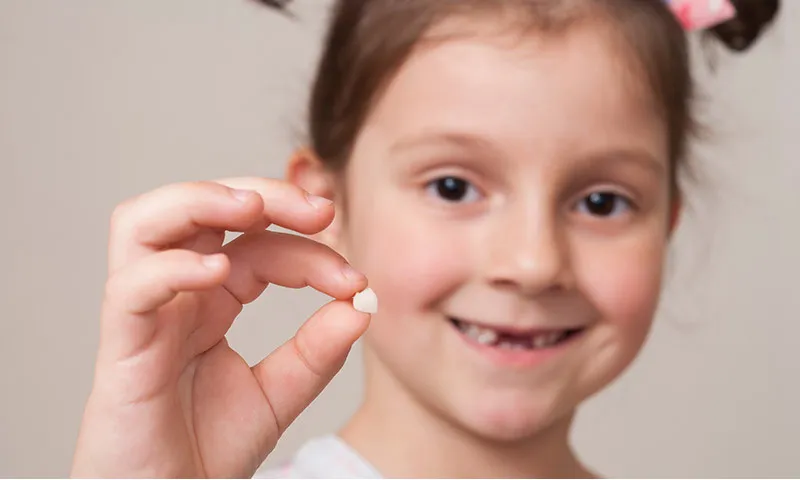
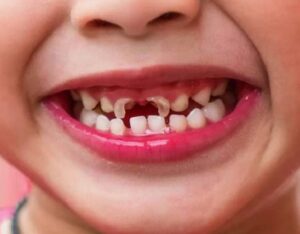
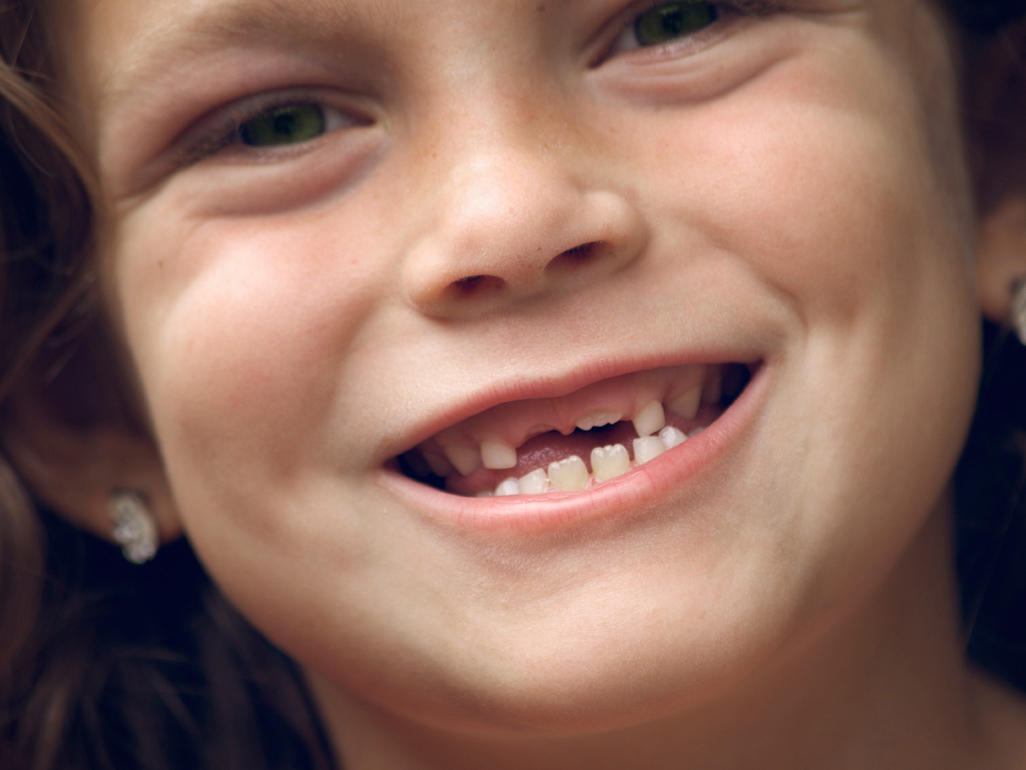
There are some cases though where the permanent tooth can start erupting directly behind the baby tooth instead of under it. This causes the formation of two rows of teeth temporarily thus giving the impression that the child has an extra set of teeth.
Permanent teeth occasionally erupt behind baby teeth :t The reason behind it
A number of reasons could be used to explain permanent teeth that erupt behind baby teeth. The most frequent cause is due to the fact that the root of the baby tooth has not deteriorated rapidly so as to see the permanent tooth replace it.
The permanent tooth in certain instances takes a slightly different course of eruption in the jawbone. It does not manifest itself directly under the baby tooth, but behind it. This is mostly usually on the lower front teeth where there might be space on the jaw that has the ability to affect the pattern of eruption.
The other factor can be the natural deviation of dental development. Other children also have permanent teeth which erupt much faster than the baby ones which have not yet fully loosened.
Is This Condition Normal?
To most children, development of permanent teeth behind the baby teeth is regarded as a normal and temporary developmental process. The baby tooth will normally loosen and fall out as the permanent tooth keeps on developing and protruding forward.
After the loss of the baby tooth, the tongue usually assists in positioning the permanent tooth in the right position eventually. The alignment in most instances is made progressively without much intervention that is necessary.
However, it is necessary to check the state of affairs to make sure that the baby tooth finally falls off, and the permanent one proceeds to take the right position.
Indications that the Tooth of Infancy is about to be knocked out.
When a baby tooth is about to be replaced by a permanent one, parents can observe a number of symptoms that this baby tooth is about to fall out. These signs may include:
- The baby tooth has become loose.
- Minimal motion when the child touches the tooth using his tongue.
- Swollen gums or erythema of the tooth.
- An exposed permanent tooth growing behind the child tooth.
To help the baby tooth to shed naturally, one can encourage the children to wiggle the loose tooth with their tongue or clean fingers and fingers softly.
At which age should parents seek dental advice?
Even though the permanent teeth being present behind baby teeth may not be dangerous in most cases, there are circumstances where expert dental care may be necessary.
When the baby tooth is firmly seated for a long time after the permanent one has erupted it is advisable that the parents visit a dentist. Failure of the baby tooth to loosen naturally may cause the permanent tooth to fail to move into place.
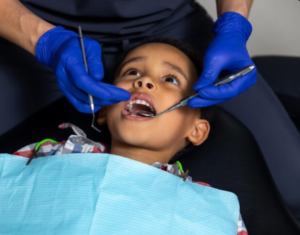
It is also advisable that dental consultation be sought in case the child has pain, swelling, or has troubles biting or chewing. The dentist can decide on such instances whether the baby tooth should be removed carefully so that the permanent tooth can be placed properly.
Possible Treatment Options
In case the baby tooth fails to fall out, the dentist might advise the child to undergo a simple tooth extraction. When the baby tooth is removed, the permanent tooth has a better opportunity of moving forward into position.
In most instances, once the baby tooth has been removed, it is no longer necessary to administer any other treatment. The teeth of the child are slowly shoved into place as the jaw of the child keeps expanding.
Nevertheless, where crowding or alignment is present, orthodontic reviewing can be advised later in life so as to have the correct position of the teeth.
Promoting Healthy Dental Development.
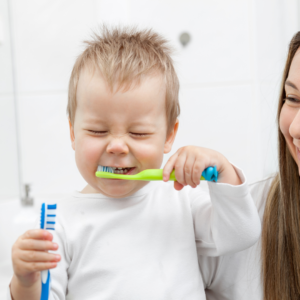
Parents have the ability to take care of the mouth development of their child by observing good dentistry hygiene regimens at this transition period. The children will brush their teeth twice a day with fluoride toothpaste and start to floss when permanent teeth just start contacting.
Dental check-ups are also important especially at the mixed dentition stage i.e when both the permanent and baby teeth are present. Professional monitoring enables dentists to identify the possible problems at an early stage and give specific direction depending on the needs of the child.
Conclusion
The emergence of permanent teeth behind the baby teeth may be quite strange at first, but in most situations it is normal development in the teeth. The mouth adapts with time to a new set of teeth as permanent teeth continue to enlarge and the teeth of the babies soften. Most children pass through the primary dentition to the permanent dentition with ease with the careful observation and with the appropriate oral hygiene.
However, it is the task of the professional evaluation that this should happen without any problem. Dentistry Junior offers specialized care and advice in this critical period of development of a child to enable the child to have healthy and well-aligned smiles when permanent teeth come out.